
High moisture readings can be important evidence, but they are not a diagnosis on their own. This anonymised case study shows why a wider inspection matters before a buyer commits to damp treatment or replastering.
Property and instruction
The property was a modernised, traditionally constructed end-terrace with solid walls and a rear outrigger. A Level 3 Building Survey was commissioned to assess its condition before purchase.
What the inspection found
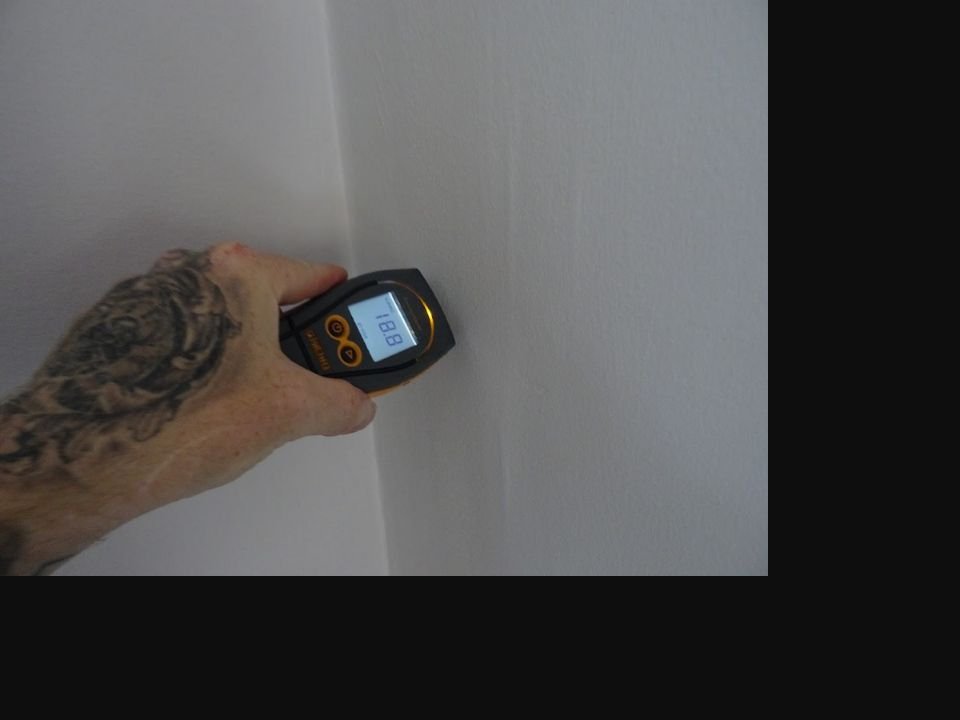
Elevated moisture readings and visible deterioration were recorded to several external-facing and internal walls. Outside, painted render was extensively cracked, hollow and debonded. An impermeable coating appeared capable of trapping moisture, while a loose rear gutter with an incorrect fall created another credible route for rainwater to enter the fabric.
However, the pattern was not confined to external walls. Its distribution also raised the possibility of a concealed leak from the incoming water supply or buried pipework. Historic leakage from appliances could not be ruled out either.
Why the diagnosis was not rushed
A meter reading can be influenced by salts, wall construction and surface conditions. Treating every elevated reading as rising damp risks paying for work that does not address the true source. In this case, there were several plausible moisture mechanisms, so the sensible next step was targeted investigation rather than an immediate damp-proofing specification.
Advice given
- Arrange leak detection and plumbing checks before replastering.
- Obtain an independent damp assessment from a specialist who is not financially dependent on selling a treatment system.
- Inspect and repair the failed render, high-level parapet details and defective guttering.
- Allow affected construction to dry before deciding on finishes or further treatment.
The practical lesson
The value of a detailed survey is not simply finding “damp”. It is separating symptoms from likely causes, setting out the evidence and giving the buyer a proportionate sequence of action.
This case study is anonymised and reflects a visual, non-destructive inspection of one property. Similar symptoms elsewhere may have different causes.
Concerned about moisture in a property? Read our guide to moisture meter readings in building surveys, explore a Level 3 Building Survey, or request a focused Specific Defect Survey.