
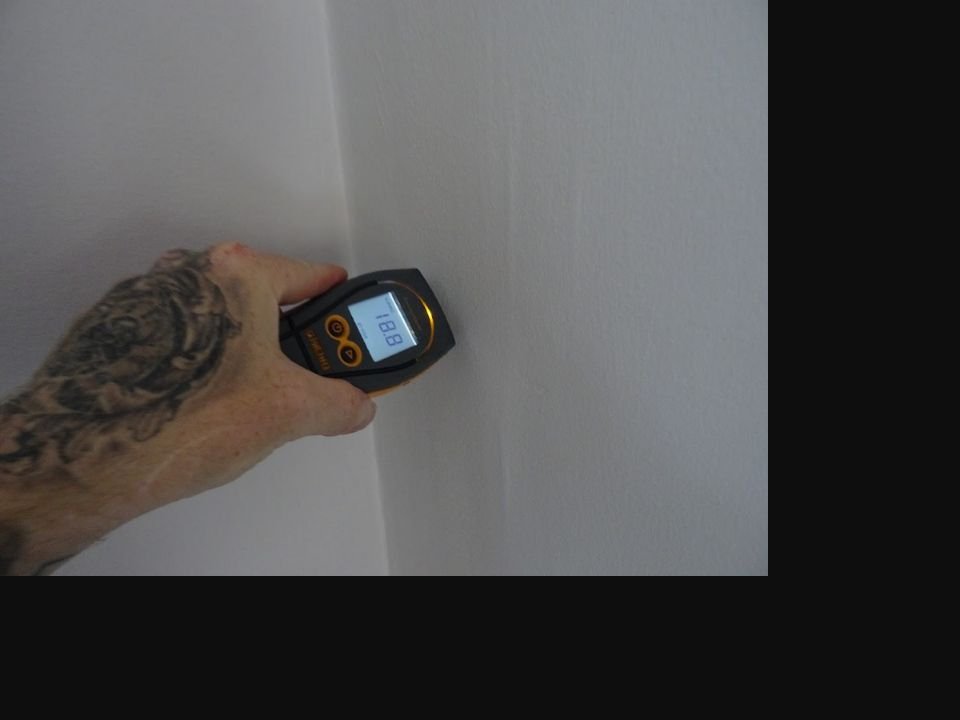
A moisture meter can be a useful part of a building survey, but the number on its screen is evidence—not a diagnosis. Readings need to be interpreted alongside the building’s construction, finishes, ventilation, weather exposure and visible defects.
What a moisture meter actually indicates
Many hand-held meters used during surveys were originally designed to measure moisture content in timber. When used comparatively on plaster or masonry, they respond to electrical conductivity. Moisture can increase conductivity, but salts, foil-backed finishes, metal components and some materials can also influence the reading.
That means a high reading at one point should prompt questions rather than an automatic conclusion of “rising damp”. A meaningful assessment considers the pattern of readings, the location and the other evidence available.
Evidence considered alongside the reading
- Visible staining, deterioration or salt deposits.
- The height and distribution of affected finishes.
- External ground levels and the position of any damp-proof course.
- Rainwater goods, drainage, pointing, render and weather exposure.
- Plumbing, sanitary fittings and possible concealed leaks.
- Ventilation, heating and patterns of condensation.
- The age and construction of the wall and floor.
- Recent decoration, replastering or remedial treatments.
Common reasons for moisture at low level
Moisture close to the base of a wall can have several causes. Raised paving or flower beds may bridge the damp-proof course. Defective gutters or rainwater pipes can repeatedly wet the masonry. A leaking pipe, poorly sealed shower or defective drainage connection may be responsible. Solid floors and modern impermeable finishes can also change how moisture moves through an older building.
Condensation is another possibility, particularly behind furniture or in cold, poorly ventilated corners. More than one mechanism can be present at the same time.
Why an instant damp-treatment quotation can be risky
A contractor selling one particular treatment may naturally view the problem through that service. Injecting a chemical damp-proof course or applying waterproof finishes will not repair a leaking rainwater pipe, lower an external path or improve inadequate ventilation.
The sensible sequence is diagnosis first, then a repair matched to the likely cause. In some cases further testing, opening-up or monitoring is justified before committing to disruptive work.
How Hunter Ellis reports suspected dampness
During a Level 3 Building Survey or Specific Defect Survey, moisture readings are considered with the accessible construction and visible condition of the property. The report explains the material observations, likely causes, implications and proportionate next steps, including further investigation where the evidence remains inconclusive.
The inspection remains visual and non-destructive unless a different scope has been expressly agreed. Concealed leaks or defects behind fixed finishes cannot always be confirmed without targeted opening-up or specialist testing.
When should a buyer investigate before exchange?
Further investigation is particularly useful where moisture is extensive, associated with timber decay, linked to an unresolved leak, concealed by recent finishes or likely to involve significant repair. The aim is not to eliminate every uncertainty, but to understand whether the potential liability could materially affect the purchase decision or budget.
See how this approach worked in practice
Our anonymised damp survey case study shows how elevated readings, failed external render, defective rainwater goods and the possibility of a concealed plumbing leak were assessed together before any treatment was recommended.
A separate Bristol Level 3 case study involving several causes of damp explains how wall defects, a local roof/chimney problem and historic plumbing damage were assessed together, including why some low-level readings remained inconclusive.
Concerned about dampness in a property?
Send Hunter Ellis the property address, photographs and a short description of the concern. We can advise whether a whole-property survey or a focused defect inspection is the more proportionate starting point.