
A drone can provide valuable close-range photographs of roofs, chimneys and other high-level areas that cannot be seen clearly from ground level. It improves the available evidence, but it does not remove every inspection limitation.
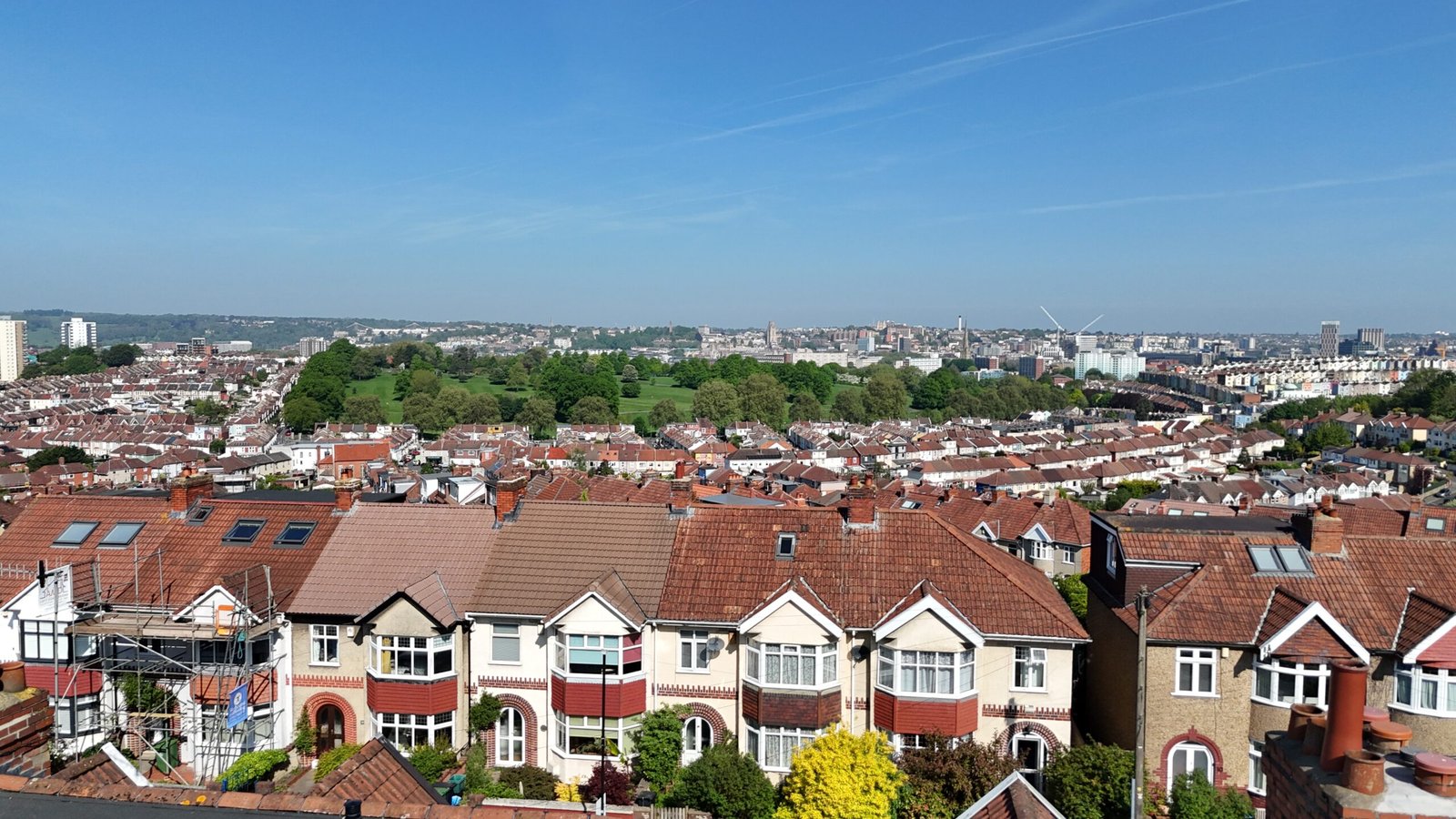
What a drone roof survey can show
- Slipped, cracked or missing tiles and slates.
- Deteriorated ridge and hip details.
- Defective chimney flaunching, pots and visible masonry.
- Condition of leadwork, flashings and accessible roof junctions.
- Blocked gutters, vegetation and obvious rainwater defects.
- Flat-roof surfaces, outlets and visible areas of ponding.
High-resolution photographs can also provide a useful record for explaining defects in a building survey report and discussing repairs with a roofer.
What it cannot prove
A drone records visible surfaces. It cannot confirm the condition of concealed battens, underlay, fixings, insulation or structural timbers. Nor can a photograph prove that a roof is watertight in every weather condition. Some defects only become apparent during prolonged or wind-driven rain.
Aerial inspection also does not replace safe internal inspection of the roof space. The underside of the covering, ventilation, insulation and structural arrangement provide different evidence.
When a drone is particularly useful
Drone inspection can add value where the roof is too high or steep for safe close access, where chimneys are difficult to view, or where adjoining structures obstruct normal sightlines. It can be especially helpful for period terraces, extended homes and properties with several roof levels.
Practical limitations
Flights depend on weather, airspace restrictions, nearby people and property, site safety and legal permissions. Strong wind, rain or restricted take-off space may prevent flying on the planned inspection day. Where a flight is not possible, the report should explain the available views and any recommended follow-up.
How Hunter Ellis uses drone evidence
Where conditions and permissions allow, drone photographs are considered alongside the external inspection, roof-space evidence and the building’s construction. The aim is not simply to provide aerial photographs, but to interpret what the visible defects may mean and identify appropriate next steps.
For a broader condition assessment, see our Roof Survey Bristol service. You can also read about our drone survey service, see a real roof survey case study, or request a survey quote.